The Purpose of the Farm in Montessori Education

The Purpose of the Farm in Montessori Education

Why a Farm?


The Erdkinder Vision: Belonging, Purpose, and Real‑World Learning

The Hershey Montessori School Huntsburg Campus farm is far more than a location—it is an essential part of our prepared environment for adolescents. Dr. Maria Montessori envisioned a farm‑based learning community, the Erdkinder (“children of the earth”), as the ideal setting for young people ages 12–18. She recognized that during this developmental stage (the Third Plane), adolescents are seeking belonging, purpose, independence, and authentic contribution. A farm offers exactly that in a living, breathing ecosystem of meaningful work, community responsibility, and real‑world learning.


Integrating Manual and Intellectual Work Through Farm Life

Dr. Montessori observed that adolescents need a balance of “manual and intellectual work” to feel whole and capable, noting that these two forms of work “complete each other and are equally essential to a civilized existence”. On the farm, academic studies intertwine naturally with daily responsibilities. Mathematics emerges in budgeting and construction projects; biology becomes vivid through animal husbandry and crop cycles; history and economics come alive as students participate in small‑scale production and exchange, contributing to a functioning micro‑economy, as seen in other adolescent Montessori programs.


Moral Development and Community Responsibility in Action

The purpose, however, reaches far beyond academics. Montessori emphasized that adolescents need to “understand society and find their place in it,” and she believed a working farm allows them to do this through genuine contribution and community living. At Hershey, students learn not only how to care for the land but how to care for one another. They practice collaboration, conflict resolution, and shared responsibility as they meet the needs of their community. This is why so many Montessori organizations describe the farm as “the ideal prepared environment for the adolescent,” supporting moral development, stewardship of the earth, and a deepened sense of responsibility to both self and society.


Leadership, Apprenticeship, and the Practice of a Micro‑Society

In addition, the farm provides developmental opportunities for students to step into real managerial and apprentice roles that mirror the functioning of a small society. As managers, students guide peers, organize workflow, communicate updates and expectations, and lead collaborative decision-making that affects daily operations of the farm and its micro‑economy. Apprentices work alongside them to learn skills, build confidence, and contribute meaningfully to the community. These rotating roles give adolescents firsthand experience with leadership, collaboration, problem‑solving, and accountability—skills Montessori identified as essential for understanding how society is organized and for developing independence during this developmental stage, preparing them for life after high school. Through this structure, students discover their strengths, gain trust in their abilities, and learn how to contribute responsibly to a community, all within a supportive, real‑world environment.


Emotional Well‑Being Through Grounded, Meaningful Work

The farm also nurtures emotional well‑being. Research from Montessori adolescent programs highlights the farm as a setting that promotes independence, resilience, and confidence through real work with real consequences—qualities that adolescents desperately need as they transition toward adulthood. The land offers grounding, purpose, and a connection to nature that is both educational and restorative.


Preparing Capable, Compassionate, and Confident Adults

For us at Hershey Montessori School, the farm is not about preparing young people to become farmers—it is about preparing them to become capable, compassionate, and confident adults. It is a place where learning is lived, where community is practiced, and where adolescents discover the power of meaningful work. It honors who they are becoming and gives them an environment worthy of their potential.

This is the heart of Montessori adolescent education—and it is the reason the farm remains central to our mission. It is the reason our graduates are grounded, emotionally balanced, well-equipped, and capable of achieving great things.


Scroll the photo gallery below to see more examples of what takes place on the farm. We welcome you to contact us to learn more at admissions@hershey-montessori.org or call 440-636-6290.

How a Boarding Experience at Hershey Montessori School Transforms Adolescents

How a Boarding Experience at Hershey Montessori School Transforms Adolescents

For many families, boarding school brings to mind rigorous academics, independence, and lifelong friendships. At Hershey Montessori School, the boarding experience offers all of that—yet it goes much deeper. It becomes a life-shaping journey that supports the unique developmental needs of adolescents at a time when they are discovering who they are and how they want to show up in the world. At the Huntsburg Campus, adolescents don’t just live away from home—they join an intentionally designed Montessori community built to nurture responsibility, purpose, confidence, and authentic independence. What happens here is transformational.

A Living Environment Designed for Adolescent Growth

The teenage years are a powerful stage of development. Adolescents are searching for identity, belonging, and meaningful work. Montessori education recognizes this phase, known as the “third plane of development,” as a time when teens need real responsibility, trust, and connection.

The boarding community at Hershey is structured to meet those needs. Students live together in a warm, supportive environment where they learn to collaborate, manage daily responsibilities, and care for both themselves and the community. This intentional setting mirrors adult life in all the right ways—while still offering the mentorship and guidance adolescents need.

Independence With Purpose

Unlike traditional residential programs, Hershey’s boarding experience isn’t simply a dorm attached to a school. It is a fully integrated part of the adolescent curriculum.

  • Students share real community responsibilities
  • Manage household routines
  • Participate in cooking and meal planning
  • Care for the property and farm
  • Collaborate on microeconomy projects
  • Develop practical, leadership, and social skills

Through these experiences, teens grow into young adults who understand how to manage time, solve problems, and contribute positively to a community. They don’t just learn independence—they live it.

A Working Farm That Builds Competence and Confidence

The Huntsburg Campus includes a working farm where students engage in purposeful work connected to nature. Whether caring for animals or tending crops, adolescents engage in work that is tangible and deeply meaningful.

This environment cultivates perseverance, environmental stewardship, and a sense of responsibility—helping teens understand the real impact of their efforts.

Strong Relationships and Deep Community

One of the most transformative aspects of boarding at Hershey is the strength of the relationships students build. Living in community teaches communication, cooperation, conflict resolution, and trust. These skills emerge naturally through shared daily life and become essential foundations for adulthood.

Guided Mentorship and Support

Hershey’s adolescent guides mentor students academically and personally. They create a safe, structured environment where teens can explore independence while receiving the support and guidance they need during this critical phase of development.

A Pathway to Meaningful Adulthood

Families often share that the growth they witness in their children is remarkable. Boarding students return home with increased maturity, independence, confidence, emotional resilience, and improved communication skills.

Hershey Montessori’s boarding experience prepares adolescents not just for college, but for life—giving them the tools they need to navigate adulthood with purpose and clarity.

More Than School. More Than Boarding.

Boarding is not just a housing option at Hershey Montessori School. It is a transformational experience rooted in Montessori principles and designed specifically for the needs of developing teens. For adolescents seeking independence, deeper learning, and meaningful work, the boarding environment at Hershey offers an unparalleled opportunity to grow into capable, confident young adults.

Growing Up in the Third Plane of Development

Growing Up in the Third Plane of Development

In Montessori education, adolescence (ages 12–18) is known as the Third Plane of Development—a period of intense personal, emotional, and intellectual transformation. It’s a stage where teens begin defining who they are, how they relate to others, and what role they want to play in society.


The Importance of the Third Plane of Development

According to Maria Montessori, human development happens in four major phases, or “planes.” The Third Plane—adolescence—is marked by rapid growth, heightened self-awareness, and a deep need for belonging and purpose. Teens are no longer just absorbing knowledge; they’re asking bigger questions:

• Who am I?

• Where do I fit in?

• How can I contribute meaningfully?

Montessori education during this plane emphasizes real-world work, supportive community life, and opportunities for independence—all designed to help young people become confident, capable adults.


How Hershey Honors This Stage of Growth

At Hershey, the Third Plane is not treated as an afterthought—it’s honored with intention. Students are given the time, space, and trust to grow into themselves while engaging in meaningful work that blends hands-on experience with academic thought.

Third Plane Development requires community building and collaboration among teen peersLiving in Community

Teens learn how to navigate friendships, resolve conflicts, take responsibility, and build trust—all while living alongside peers in a supportive environment. This experience helps them understand themselves and others on a deeper level.

Purpose-Driven Work

Whether planting crops, managing a business, caring for animals, or diving into philosophical discussions, students use both their hands and minds. Through this work, they begin to see how they can contribute to society in meaningful ways.

Developing Identity

Hershey recognizes that adolescence isn’t just about preparing for college—it’s about preparing for life. Teens crave autonomy, purpose, and connection, and we purposely design the environment and their academics to meet those needs.

What Happens When Teens Learn This Way

Real world responsibility and team work nurture the teen through the Third Plane of Development

The impact of a Montessori adolescent program goes far beyond test scores. Hershey students learn how to think critically, solve problems, and ask big questions. They’re encouraged to explore, take risks, and learn from mistakes—building a grounded sense of confidence over time.

Real-World Responsibility

From running microbusinesses to caring for the farm, students consistently practice skills they’ll use throughout life—time management, leadership, teamwork, and self-discipline.

Empathy & Emotional Growth

Living and learning in community fosters deep empathy and respect. Students understand how their actions affect others, and they learn how to work collaboratively and compassionately.


Building independence, confidence, and nurturing character are keys to Third Plane Development

Prepared for Anything

By the time they graduate, Hershey students are grounded, self-aware, and ready for whatever comes next—college, careers, or a path entirely their own. It’s not just education. It’s preparation for life.

This is why the right education cannot wait. The time for a science-based education is now. To learn more, simply click this link.


Grace and Courtesy: The Heart of a Montessori Community

Grace and Courtesy: The Heart of a Montessori Community

At Hershey Montessori School, we go beyond academics—we nurture the whole child. One of the most beautiful aspects of the Montessori approach is Grace and Courtesy, a set of lessons that teach children to interact with kindness, respect, and confidence. Montessori education teaches empathy for others by being intentional in how we treat one another.


What is Grace and Courtesy?

Grace and Courtesy lessons give children practical, real-life skills to navigate social situations thoughtfully. These lessons empower students to communicate effectively, respect others, and contribute to a peaceful community. Teachers model these behaviors and guide students through role-playing and practice.

Learn more about Montessori Practical Life Lessons and how they build independence.


Why It Matters

Grace and Courtesy slows life down and reminds us of the importance of human connection. When children greet someone warmly, offer help, or listen attentively, they develop empathy and self-awareness—skills that last a lifetime.

See how Montessori schools educate for peace and how these lessons foster harmony.


Examples in Our Classrooms

  • Children greet friends and visitors politely.
  • They wait patiently for their turn.
  • They offer assistance when someone needs help.
  • They express gratitude and say “thank you.”
  • They move quietly and respectfully through shared spaces.

We weave these lessons into daily life at Hershey Montessori School at all grade/program levels, creating an environment where every child and adolescent feels valued and respected.


The Montessori Difference

Grace and Courtesy does not impose rigid rules—it cultivates a culture of respect and care. By practicing these skills, students learn that their actions impact others, and they gain confidence in their ability to contribute positively to their community.

“We must prepare the child for the forms of social life, and we must guide his attention toward these forms.”

— Maria Montessori


Join Us in Nurturing Grace

Grace and Courtesy thrives here—not through rigid rules, but through living examples and shared values.

By weaving Grace and Courtesy into every moment, Hershey Montessori empowers students to become caring, confident contributors to society—just as Dr. Maria Montessori envisioned.

We invite you to visit a classroom—see how our students practice grace with one another and with visitors. Talk with our guides about how you can reinforce these lessons at home – or share a photo or story of your child showing courtesy!

Cursive Handwriting Boosts Brain Development in Montessori Students 

Cursive Handwriting Boosts Brain Development in Montessori Students 

Montessori Philosophy Meets Cursive Writing 

Montessori educators embrace cursive handwriting as a powerful tool for early childhood development. Guides at Hershey Montessori School integrate cursive into their curriculum as early as Children’s House where children ages three to six begin benefitting from its additional support of brain growth, literacy, and fine motor skills. 

Scientific Evidence of Brain Activation 

Scientific studies show that children who learn cursive activate important brain regions linked to memory, language, and coordination. This increased brain activity helps students retain information, express ideas more clearly, and develop stronger writing fluency. For example, a high-density EEG study published in Frontiers in Psychology found that cursive handwriting activates synchronized brain activity in regions critical for learning and memory formation (Frontiers Study). 

Fluid Motion Enhances Literacy 

Unlike print writing or typing, cursive encourages smooth, continuous motion. This fluidity allows children to write faster and focus more on their thoughts than on forming individual letters. It also helps reduce common letter reversals, such as confusing “b” and “d,” which supports early reading and spelling (The OT Toolbox). 

Motor Skills and Academic Performance 

Cursive writing strengthens hand-eye coordination and fine motor control—skills essential for academic success and everyday tasks. A study published in PLOS ONE showed that first-grade students who received cursive instruction performed better in reading and writing assessments than those who did not (PLOS ONE Study). 

Support for Diverse Learners 

For children with learning differences, cursive can offer a more accessible and effective way to communicate. Neuroscience research from the Norwegian University of Science and Technology also confirms that handwriting—especially cursive—boosts brain connectivity more than typing, enhancing memory and learning (Neuroscience News). 

Cursive as a Gateway to Expression and Growth 

By teaching cursive, Montessori schools connect students to history, personal expression, and lifelong learning. Cursive handwriting is proven to be a powerful tool for early childhood development. At Hershey Montessori, we view cursive as more than handwriting—it’s a gateway to cognitive growth and creative confidence. 

Staff Spotlight: Jennifer Finan

Staff Spotlight: Jennifer Finan

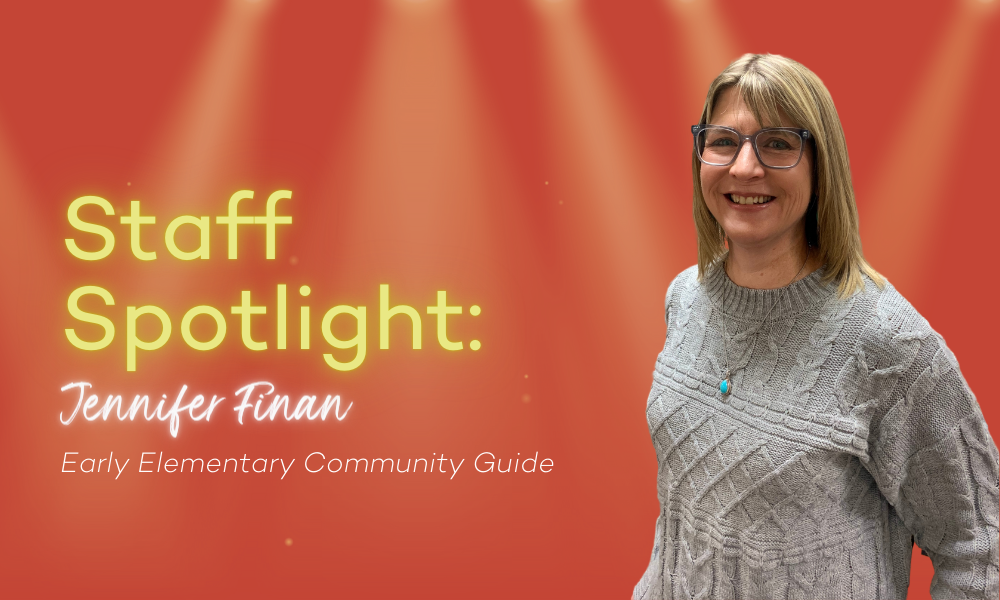
We have the pleasure of honoring our longest-serving staff member, Jennifer Finan, in this Spotlight. Jennifer has been a part of the Hershey family for more than 30 years! She is our Early Elementary guide but has also had the opportunity to teach in the Upper Elementary for six years. Many years ago, along with teaching in the elementary, Jennifer also worked in Morning Care. She ran our summer camp program for a few summers and even worked at the front desk. For the past 10+ years, she has assisted Cheryl McGovern in the ‘Just Run’ program for students wanting to train to run a 5K.

Jennifer grew up in Stow, Ohio, and currently lives in Concord Township. She and her husband, Chris, will be celebrating their 25th anniversary in 2023. Jennifer fondly remembers her Upper Elementary class attending her wedding in 1998. She has a daughter named Erin, who attended Hershey her entire life. Erin is currently finishing up her senior year at Ohio University (Jennifer’s alma mater) and will be graduating with a major in Journalism and a minor in Linguistics in May. Jennifer’s family also has a very loving and large 17-pound cat named Archie. Jennifer loves when she, Chris, and Erin are together. The three of them have been to many places together hiking, camping, and exploring. Those times when just the 3 of them are together are her happiest moments.

A fun fact about Jennifer is that she is an only child, grandchild, niece, and cousin. She is also someone who loves candy corn in the fall and jellybeans in the spring. Her favorite things to do are hiking and camping, reading, exercising, and traveling to new places.

Enjoy our full interview with Jennifer below:


Hi Jennifer, do you have a nickname?

My closest and dearest friends usually call me Jen.


Can you briefly explain your position?

I would say aside from following my AMI albums, supporting children with their follow-up work, and educational/emotional growth, and giving key lessons throughout the curriculum, I love to tell the children stories and help support them with a task they originally thought impossible to complete. Telling stories sparks the children’s interest in a variety of ways and most of these ways even surprise me. I tell personal stories (probably their favorites), stories about historical figures that came before us, stories of the earth and the animals and plants that live here with us, stories of cultures and civilizations, inventions, etc. The list is endless. I also love to see the pride on a child’s face in their accomplishments or successes, especially when it was something that was thought impossible and/or done independently. Letting a child know that they can do BIG work and accomplish BIG tasks on their own, is one of the greatest gifts we can give them.


We agree! What did you do before coming to Hershey?

I attended Ohio University and graduated with a degree in Hearing & Speech Sciences in 1991. I worked for one year at Hudson Montessori School as an elementary assistant and fell in love with the Montessori method of education. The following year I took my AMI Elementary Montessori training at the Washington Montessori Institute and was then hired by Hershey in the spring of 1993.


Can you tell us what brought you to Hershey?                                

When I was finishing my training, I was looking for a teaching job and was so excited to find out that Hershey was looking for an Early Elementary guide for their new classroom. I knew the school had a good reputation and had heard about it when I worked at Hudson Montessori. I wanted to return to Ohio. It was already April, and they didn’t have enough money left in their ‘new hire’ budget for transportation (such as a flight) but said there was enough for me to rent a car. So, I drove from D.C. to my parents in Stow so that I could interview. I was the last interview they were having for the job. Jeanne Catalano (Early El. guide), who happened to live in Stow, drove me up to Hershey for my interview and always teased that she had hired me on the drive.


We are thrilled that she did! What drew you to Montessori?

I was in the Education College at Ohio University for a year but really did not enjoy it. However, after being a Montessori assistant for a few months, I was fascinated by the Montessori Method and wanted to learn more and begin taking my training. I love the focus on the whole child and I love having the same students for 3 years. You really can take the time to get to know how they learn and form a lasting relationship with each child.


That’s so true. Tell us what you do at Hershey that is unique to you.

Besides currently guiding one of our Early Elementary communities, I organize Professional Observations for Montessori professionals or individuals who are taking their training and looking for opportunities to meet their observation and student teaching requirements (at the Concord Campus). For many years, I was also on call to come to the school when the alarms went off (ask me about the time I walked through two feet of snow to meet the fire department in the middle of a snowstorm at 3:00 am). You can say I have worn many hats over my 30 years at Hershey!


I’m sure that is a story to tell! What would you say is your favorite part of your work at Hershey?

The children. Seeing them grow through the program at Concord and graduate as young adults. The people. The staff, past and present, are an amazing group of individuals that I am grateful to have in my life and to call many of them my friend.


Where is your favorite place to go?

I absolutely love our nation’s National Parks. I grew up camping and visiting our country’s parks, monuments, forests, and historical sites with my parents, and have continued the tradition with my own family. If I wasn’t a teacher my dream job was always to be a National Park ranger. I tell many stories of my adventures to the children and always encourage them to visit these national treasures. My favorite parks are Glacier, Acadia, Bryce, and the Grand Tetons. I have been to 32 and look forward to crossing the final 31 off my list.


Sounds incredible! What is your favorite book?

My absolute favorite activity to do with my students is to read aloud to them. “Read all the stories, do all the voices.” I love to read chapter and picture books alike. My current class and I are in the process of reading all 84 Caldecott Medal winners. Over the years I have read many chapter books to my students but some of the absolute favorites that I reread most often are The Tale of Despereaux, James and the Giant Peach, The Miraculous Journey of Edward Tulane, and with an upper elementary class Tuck Everlasting.


Do you have a favorite quote?

“The greatest gifts we can give our children are the roots of responsibility and the wings of independence.” —Maria Montessori

“Talk to yourself like you would to someone you love.” ~ Brene Brown


Those are great quotes. Do you have a favorite movie?

There are too many at this point to choose a favorite.


That’s certainly fair. How would your friends and family describe you?

Determined, resilient, and understanding. The keeper of memories of the school, the ‘Hershey Historian.’ A dear friend and colleague shared the following with me, “Passionate and enthusiastic about teaching, loves being in the environment with students/children and is very nurturing, inspiring to those around, strong leader, committed, warm, supportive, highly devoted to the students and community and easily seen with so much experience, approachable and attentive when you need a listening ear, always gives good advice (gives an honest answer/opinion in a kind way), trustworthy, easy to collaborate with and a “sounding board,” read alouds are always fun and uses voices to read, her life’s work is to make learning a joy.”


That’s why we love you. How would you describe yourself?

Oh, my goodness this is a tough one….after reading the above, you can add humbled. I guess I would say easygoing and supportive. I am also an aspiring librarian (the saying is that I have a book on everything), and a National Park Ranger at heart.


Do you have a favorite Hershey memory?                     

After being a part of this wonderful community for 30 years, this is a very challenging question to answer and could possibly be an article all by itself. 😉

Here are a few that come to mind, although there are so many more that I could share with you.😊

  • Camping overnight in the field behind the Concord Campus with my upper elementary students and 3rd-grade students
  • Taking my upper elementary students to Washington D.C. for a week and having the tour guide at the Capitol compliment them on their amazing patience and mature behavior while waiting for 2 hours before our tour.
  • Also, taking my upper elementary students on a class trip to Mammoth Cave National Park — all 35 of them!
  • Putting on full-length plays for the parents with my upper elementary students.
  • Being blessed with FIVE amazing assistants during my 30 years!
  • Seeing my early elementary students go through the Hershey program and then see them graduate, go onto college and/or careers, get married, and begin families of their own.
  • Hearing the laughter of staff members through the hallways at the end of a school day.
  • Reading aloud with my children and crying at the end of a novel together because it was so good.
  • Being present and taking part in both the initial groundbreaking ceremony for the Adolescent Program at Huntsburg as well as the groundbreaking for the Upper School building.
  • Getting soaking-wet hugs from the 6th-year students after their celebratory 6th-year soak (and hugs from students in general)
  • Laughing with my students/children over a silly joke or a shared moment during the day.


Those are all beautiful. Can you now share with us who has made the biggest impact on your life?

My daughter. Seeing the world through her eyes as she has grown up has opened my eyes to many adventures and learning opportunities to better myself as a human being, parent, and teacher. I would also say all my students/children past and present.  Each and every one of them has taught me valuable lessons that have supported my growth as a Montessori guide.


What is the biggest life lesson you would like to share with others?

Everything comes to you at the right moment. Be patient and present so you don’t miss these moments when they present themselves to you.


That is wonderful advice and worthwhile to remember, Jennifer. We are grateful for you and appreciate being able to recognize you among our Hershey community both near and far. You continue to contribute great and wonderful things to this school and all those around you. You pour so much of yourself into your work with students and it shows. We celebrate you!